





{{ variable.name }} : {{ variable.values[selectedVariantsIndex[variable_index]].name }}
Quantity:
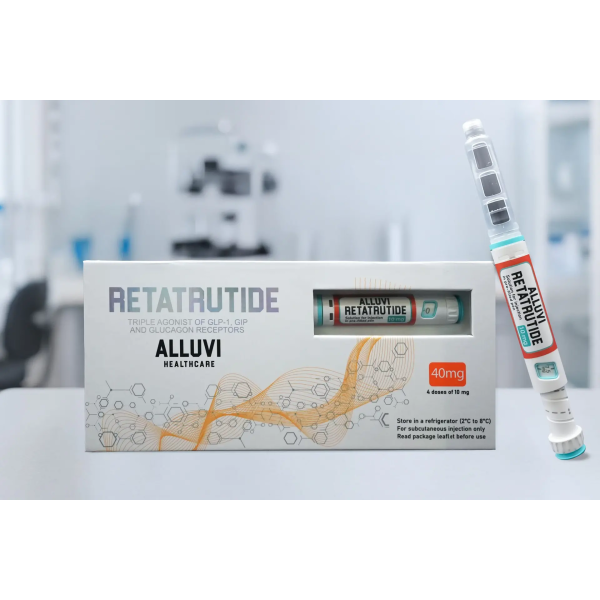
Retatrutide is an experimental, once-weekly injectable compound being studied for chronic weight management, type 2 diabetes, and potentially fatty liver disease. Known as a "triple G" agonist, it targets three receptors (GLP-1, GIP, and glucagon) to suppress appetite and increase energy expenditure. Retatrutide is currently in Phase 3 clinical trials and is not yet approved by regulators for public use. However, initial results have produced significant reductions in body weight and many other benefits. Retatrutide mimics three hormones (GIP, GLP-1, and glucagon) to increase satiety, slow digestion, and boost metabolism. During trials, subjects started the dosage at 2mg once per week, injecting into the stomach or thigh area and slowly increasing the dosage per week or even split dosing the product twice a week. Effective results in trials showed that those who benefitted with long-term weight loss then stepped down the dosage once reaching the desired weight.
A simplified summary of what Retatrutide is studied for in research models. For laboratory in-vitro use only.
Sequence:39-amino-acid synthetic triagonist peptide (fatty-acid-modified)
Origin: Engineered triple incretin analogue developed as a single-molecule agonist at GIP, GLP-1 and glucagon receptors.
Retatrutide is studied as a balanced agonist at three class B GPCRs simultaneously. Lipid-tail conjugation extends preclinical half-life via albumin binding.
Research examines convergent Gs / cAMP / PKA signalling across the three incretin receptors and downstream effects on energy expenditure pathways in animal models.
Investigated in rodent and non-human primate models of diet-induced obesity, hepatic steatosis and glycaemic dysregulation. Not approved for human use.